
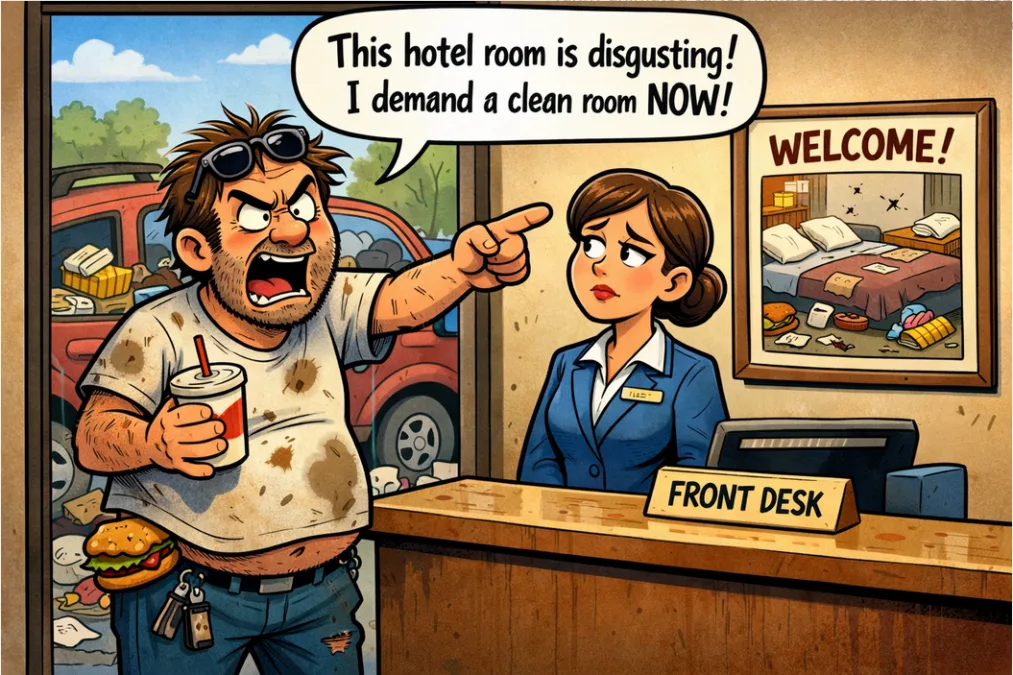
The Slob Brain: “You’re Uptight… Now Please Clean Everything for Me”
There’s a fascinating mental gymnastics routine that happens inside the head of a slob. On one hand, they openly mock neat, organized people as “uptight,” “obsessive,” or “living in a sterile environment.” On the other hand, they expect every shared space they enter to meet hotel-level cleanliness standards. Somehow, both of these beliefs exist at the same time without setting off any internal alarms.
The criticism usually sounds the same. Neat people are accused of being rigid, controlling, and incapable of relaxing. The word “sterile” gets thrown around a lot, as if having a clean countertop is equivalent to living inside a surgical operating room. There’s this weird framing that being organized is not just a preference, but some kind of personality flaw.
But then the same person walks into a hotel room and suddenly turns into a hygiene inspector. They check the sheets, scan the bathroom, and look for anything even slightly out of place. If they find something, the tone shifts immediately. Now it’s not about being “uptight.” Now it’s about “standards.”
So which is it? Is cleanliness an unnecessary obsession, or is it the bare minimum expectation?
This is where the logic completely falls apart. Because what’s actually happening isn’t a disagreement about cleanliness. It’s a refusal to take responsibility for it. Slobs don’t hate clean environments. They clearly prefer them. They just don’t want to be the ones maintaining them.
So instead, they flip the narrative. They rebrand their own habits as being “laid back” or “not obsessive,” while labeling anyone who keeps things in order as the problem. It’s a convenient way to avoid the uncomfortable truth that keeping a space clean requires effort, consistency, and a little bit of discipline.
Meanwhile, they fully rely on that same discipline from everyone else. They expect the hotel staff to be thorough. They expect the rental car to be spotless. They expect the restaurant table to be wiped down properly. They expect locker rooms, public restrooms, and shared spaces to be clean and functional.
In other words, they benefit from neat people constantly. They just don’t want to join the team.
And when you point this out, there’s usually a quick pivot. Suddenly it’s, “Well yeah, but that’s different.” It’s always different when someone else is doing the work.
What’s really going on here is simple. Calling someone “uptight” is easier than admitting you don’t feel like dealing with your own mess. It’s a defensive move. If you can make neatness seem extreme or unreasonable, then your own habits start to feel justified by comparison.
But the reality is pretty obvious when you strip away the excuses. If you consistently expect clean environments everywhere you go, then you already agree that clean is better than messy. You’ve already made the decision. You’re just outsourcing the effort.
And here’s the part that really drives it home.
You will never, in the history of humanity, see a neat person walk into a spotless hotel room, pause, and say, “Hmm… this is a bit much. Can we mess it up a little?”
No one has ever called the front desk and said, “Yeah, everything is perfectly clean, organized, and comfortable… but I was hoping for more crumbs. Maybe a few random socks on the floor? Can someone come in and just kind of… disrupt this?”
You’re not going to hear, “Excuse me, this rental car is way too tidy. Could you throw some fast food wrappers in the backseat and smear something mysterious on the console so I can feel more at home?”
It doesn’t happen.
Because even the neatest person on earth, the so-called “uptight” one, fully understands that clean is the better default. They might not enjoy creating the mess, but they definitely don’t want to walk into one.
And then comes the ultimate tell. The annual tradition. The holiday panic clean.
Every single year, like clockwork, the same people who live comfortably in chaos suddenly snap into action because family is coming over. Now it’s a full-blown emergency. Trash bags flying, vacuum running, surfaces getting wiped like a crime scene is about to be investigated. Items that have been sitting untouched for months are suddenly “in the way” and need to disappear immediately.
Why?
Because deep down, they know exactly what a presentable, comfortable, welcoming space looks like. They understand that clean equals hospitable. They understand that people feel better in an organized environment. They understand all of it.
They just don’t apply it… until there’s social pressure.
So for one brief, shining moment, their home resembles the very thing they’ve been criticizing all year. Order. Cleanliness. Structure. And somehow, during this transformation, they don’t feel oppressed. They don’t feel like they’re living in a sterile nightmare. They feel relieved.
Then the guests leave, and within 48 hours, the system collapses back into chaos.
And yet, despite all of this, they still have the nerve to throw shots at people who simply live that way all the time. People who clean as they go, keep things in order, and don’t need a countdown timer and incoming guests to trigger basic maintenance.
That’s the part that makes it funny.
Because at every major moment where it actually matters, public spaces, shared environments, and yes, even their own homes when guests are involved, they reveal exactly what they believe is better.
They just don’t want to admit it when no one’s watching.
SEARCH FOR ANY ARTICLE BY KEYWORD
More results...